
Arrest Records in Young County
The Young County Sheriff's Office makes arrests in unincorporated areas and keeps jail booking and release data. Graham Police Department and Olney Police Department keep records for incidents their officers handle. Other possible custodians include Texas DPS Highway Patrol, game wardens, constables, and a commissioned school officer. Newcastle City Hall can help identify whether a city or county agency responded to a local event. The right report comes from the arresting agency, even when the person was booked into the county jail.
A Young County arrest history is not one document. The officer's report describes the custody event and probable cause. The jail records intake charges, bond, holds, and release. A magistrate records warnings and bond action. Prosecutors choose whether and what to file. The clerk then maintains the court cause and its disposition. Texas DPS may connect a fingerprint transaction to a statewide arrest cycle. Compare these sources instead of treating any one as complete.
Young County's Phone-First Arrest Search
The official Young County Sheriff page gives the main line, 940-549-1555, and refers visitors to VINELink for custody status. It does not publish a county-branded inmate roster, daily booking list, warrant database, or mobile app. For a recent Young County event, call with the person's exact name and approximate booking date. Ask whether the person was accepted into custody, then request the booking number, charges at intake, bond, arresting agency, court, and current release status.
Young County Sheriff and Jail
315 North Cliff Drive
Graham, TX 76450
940-549-1555
Confirm the correct entrance and hours by phone.
VINELink is useful for notification, but its status is not the arrest narrative or a full booking file. Confirm a match with the jail. If the event is older, request the booking sheet and releasable custody data under the Texas Public Information Act. No verified fax, public request portal, drop box, or dedicated records counter was documented, so ask the sheriff to identify the current receiving email, mailing address, or appointment process.
Young County Arrest Lookups
A complete Young County arrest lookup follows the record chain. Start with the jail when custody may be current, but move to the source agency for the narrative and to the proper clerk after charges are filed. The Texas DPS public name product is narrower than a full fingerprint record, and a paid no-match does not rule out a local arrest. Use the fingerprint personal-review route when auditing your own Texas history.
- Call the Young County jail and use its official VINELink referral for current custody or notification, then confirm the match.
- Identify the arresting agency and request its arrest or incident report by report number, date, time, and place.
- Check the District Clerk for a felony, County Clerk for a county misdemeanor, or the issuing municipal or justice clerk for a Class C matter.
- Use the Texas DPS Criminal History Search for publicly releasable statewide conviction and deferred-adjudication data, or the fingerprint process for your own fuller review.
- Submit a written TPIA request for an existing booking, arrest, CAD, 911, or body-camera record when the direct inquiry does not supply it.
If no current Young County jail match appears, ask whether the person was released, transferred, booked under another legal name, or never accepted at that jail. Then contact the arresting agency and case clerk. Absence from a current-custody tool does not establish that an arrest never occurred.
Young County Arrest Agency Requests
The Young County sheriff cannot supply every city police narrative. Graham incidents belong with Graham PD; Olney events belong with Olney Police when that agency responded. For Newcastle, identify the responder through City Hall and then route the request to the sheriff or other agency. Highway Patrol and game-law reports remain with their state custodians. A request should seek an existing arrest report, incident report, booking sheet, dispatch record, 911 audio, or body-camera recording rather than ask the agency to answer broad questions.
| Custodian | Best source for | Official route |
|---|---|---|
| Young County Sheriff | County arrest report and jail booking | 940-549-1555 and sheriff page |
| Graham Police | Graham incident and arrest narrative | Official GPD site |
| Olney Police | Olney incident or arrest report | City police page |
| District or County Clerk | Filed charge, docket, and outcome | Young County courthouse directory |
For body-camera material, provide the event date, approximate time, location, and one or more known depicted persons. Ask for segregable public portions when protected details require redaction. Juvenile data, active-investigation material, medical facts, protected victim identifiers, driver's-license data, and security-sensitive information may not be public.
Arrest Records: What They Contain
A Young County booking record centers on intake. It may identify the event, person, agency, initial allegations, bond, holds, and release. The officer's arrest report adds the alleged facts and legal authority. Restricted medical, safety, classification, juvenile, victim, and personal identifier fields are not public merely because booking occurred. A photograph, when releasable, records intake identity and is never proof of guilt.
| Booking number | The jail's identifier for the intake event. |
|---|---|
| Booking date and time | When custody was accepted and processed. |
| Arresting agency | The sheriff, city police, or other agency that owns the narrative. |
| Charges | Allegations entered at intake; these can change after prosecutor review. |
| Bond and holds | Amount, type, court, warrants, or detainers when public. |
| Booking photograph | No official county gallery exists; request releasable records from the sheriff. |
| Release status | Release date or reason, transfer, bond, or continuing custody. |
A Young County arrest report may also show the agency case number, arrest time and place, warrant or warrantless basis, officer identifier, alleged statutes, property, and evidence references. The public version can omit protected witness and victim facts. Match its agency number to the jail's booking number and the court's cause number instead of assuming all three systems use one identifier.
Young County Arrests Reach DPS
When booking staff capture a reportable fingerprint transaction, Texas DPS assigns or matches the State Identification Number and builds an arrest cycle in the Computerized Criminal History system. Prosecutors and clerks later report filed charges and dispositions. Gaps can appear when fingerprints were not taken, demographic data do not match, a transaction has not arrived, or the final outcome was not linked to the arrest cycle.
For a person's own identity-based audit, the fingerprint route is stronger than a name match. The FBI Electronic Departmental Order portal is a separate subject-only route for an FBI Identity History Summary.
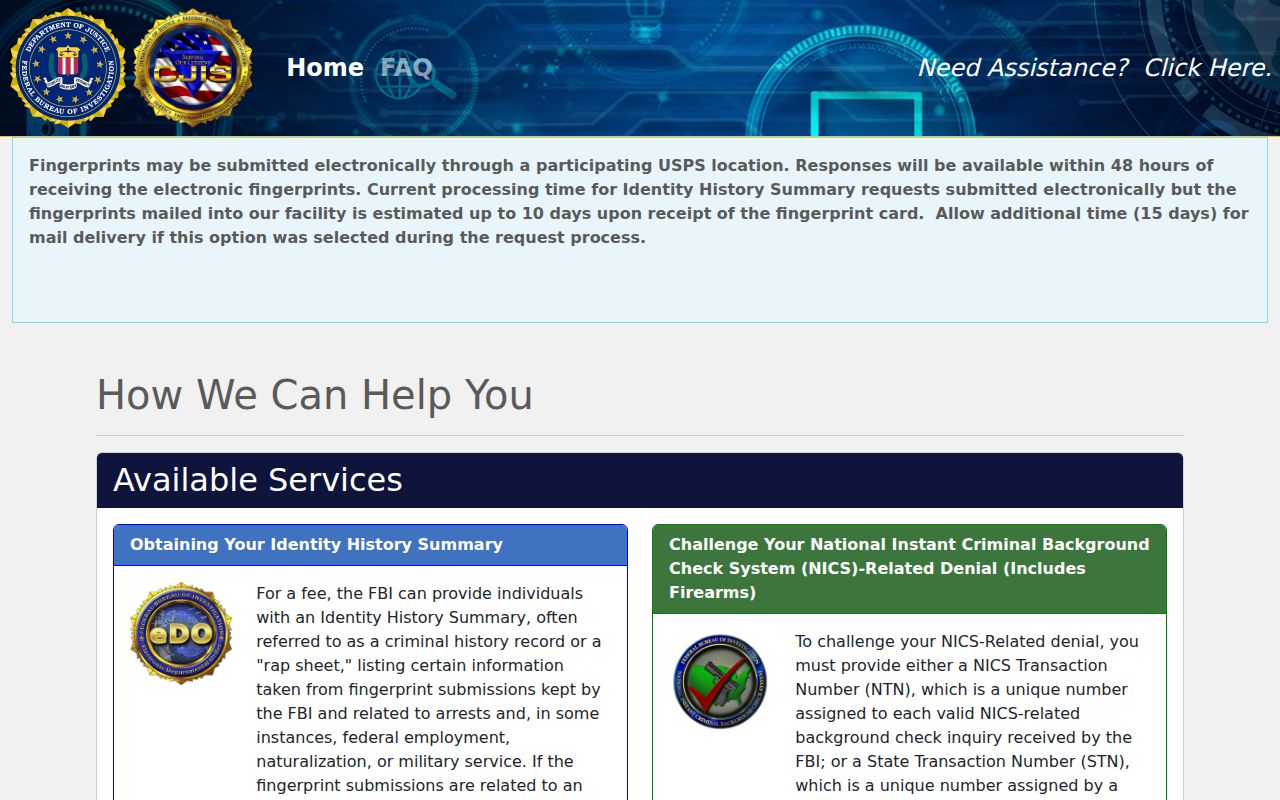
The FBI result is not a Young County clerk search. For a missing Texas outcome, compare the fingerprint-based DPS record to a certified local disposition and use the official correction process.
Note: Name searches can confuse people with similar identities, while fingerprint review is designed to match the subject to the record.
Recent Young County Bookings
No authenticated Young County daily booking log, inmate roster, or mugshot gallery was found on the official county site. That is an access limitation, not a no-record finding. Use the sheriff's phone line for current local custody and its official VINELink referral for status alerts. Request historical booking data from the jail. Do not rely on an unofficial roster or mugshot site.
Young County booking allegations can be rejected, reduced, enhanced, dismissed, or split after prosecutor review. Recheck the proper clerk after filing. The Young County court case lookup explains where the docket, charging document, and disposition live. Release also can lag after payment while staff check other warrants, detainers, and paperwork.
Young County Arrest Custody Layers
The county jail handles local pretrial and short-term custody. TDCJ covers Texas prison and state-jail custody after sentence. The Bureau of Prisons covers federal custody. Moving from one system to another does not erase the earlier booking, but each locator has a different scope. A county jail no-match may simply mean the person was released or transferred.
The official TDCJ Inmate Search accepts a name or TDCJ and SID identifiers.
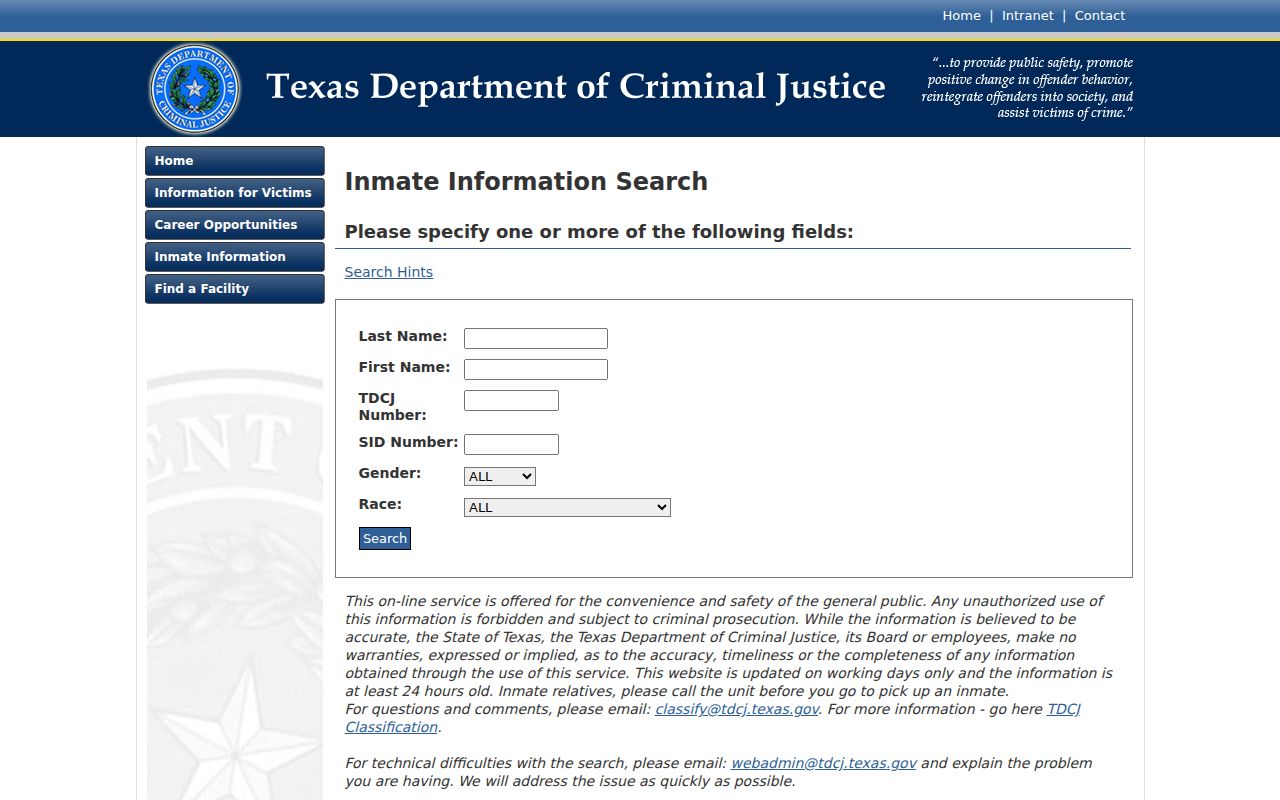
This form searches sentenced state custody, not people held only at the Young County Jail. TDCJ's IVSS adds status and notification functions, and the IVSS offender search supports name, SID, and TDCJ-number routes, including documented wildcard use.
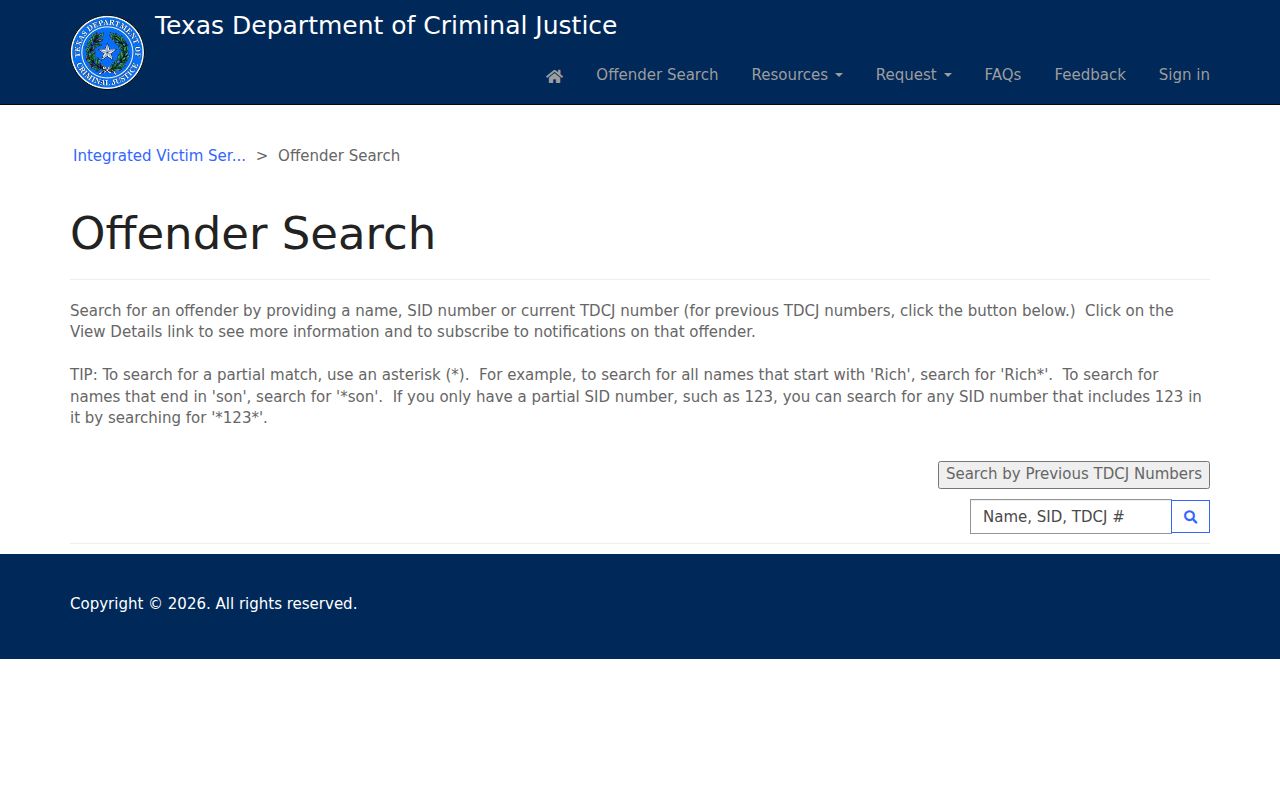
An IVSS match can show custody or parole-related status, but it does not supply the Young County arrest narrative or full court file.
Young County Arrest Custody Fallbacks
TDCJ also has a no-cost email channel for specific public offender information. Its instructions say a requester may provide the full name and seven-digit TDCJ number or, if that number is unknown, the exact birth date or approximate age and county of conviction. Available fields can include location, conviction offense, current and prior incarceration details, and projected release date. Photographs and Social Security numbers are excluded. The TDCJ email information page sets out that official fallback.
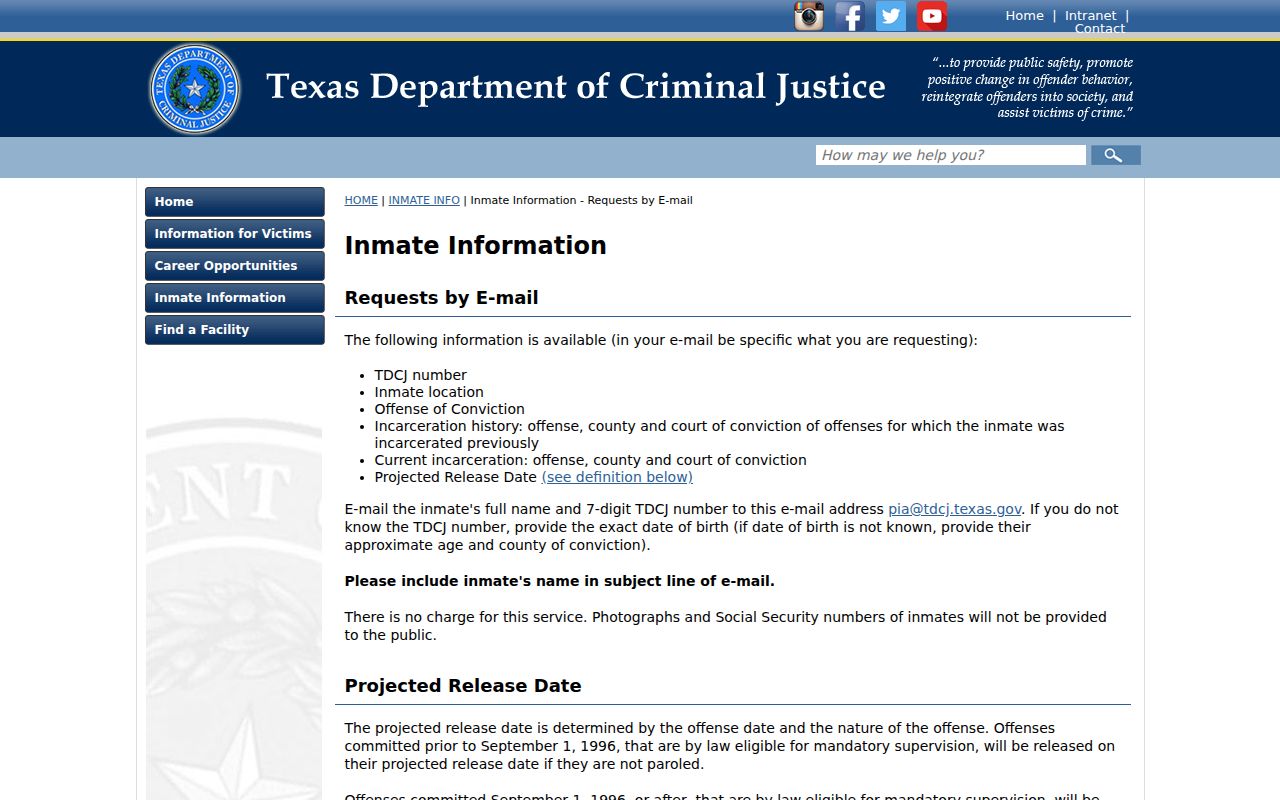
Email custody information is still a state-sentence source. It will not replace a recent Young County booking inquiry.
For a federal sentence, use the BOP Inmate Locator.
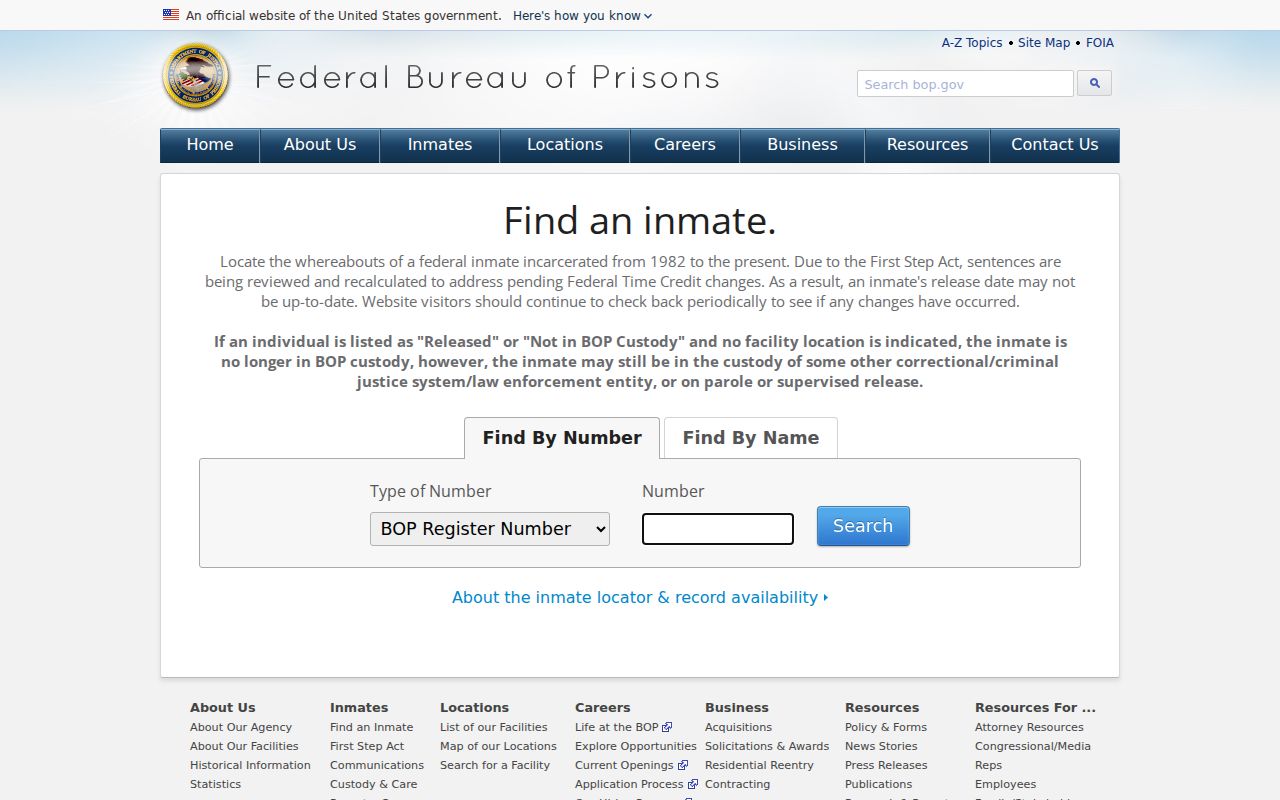
The BOP form searches federal custody by name or identifier. County pretrial detainees are outside its scope, so the sheriff remains the first contact for a recent local booking.
Arrest Records vs Conviction Records
A Young County arrest record shows that an officer took a person into custody or that a booking occurred. It does not establish guilt. A conviction follows a court judgment. In Young County, the sheriff or arresting police agency holds the arrest-side records, while the appropriate clerk holds the filed case. DPS may show publicly releasable conviction or deferred-adjudication data, but its paid name product is not a complete local arrest list.
| Arrest record | Conviction record |
|---|---|
| Created by the arresting agency and jail | Created through the court and reported to DPS |
| Shows custody and allegations | Shows a judgment of guilt and sentence |
| Lives with police, sheriff, and booking system | Lives with the clerk and authorized state repository |
| May end in release, no filing, dismissal, or acquittal | May lead to sentence, appeal, supervision, or later restricted access |
Note: An arrest is not proof of guilt, and Young County booking charges may differ from the prosecutor's filed charges.
A dismissal or acquittal does not automatically erase the arrest. Texas expunction under Code of Criminal Procedure Chapter 55A is a separate, eligibility-specific court remedy. Obtain the certified disposition, review every charge from the arrest, and use the Young County District Clerk's local expunction agency-list aid only as a service-list resource, not as a petition or promise of relief.