
Criminal Court Cases in Young County
The 90th Judicial District Court is Young County's felony trial court, and the District Clerk receives, indexes, scans, searches, and supplies its criminal files. The constitutional County Court and County Clerk are the likely route for Class A and Class B misdemeanor causes assigned there. Justice courts and municipal courts keep their own fine-only matters and magistrate records. Graham Municipal Court, for example, hears Graham ordinance and Class C cases. It is not a countywide criminal-case index.
A cause number is tied to a particular court. Start with the alleged offense level, arrest location, and the name of the issuing court on any citation or bond paper. Then contact the correct custodian. The county's departments share a courthouse, but they do not share one universal public records counter. A clerk can confirm whether a name appears in that office's index and explain how to request the docket sheet or copies.
Young County Felony Case Files
The official Young County District Court page identifies the local felony venue. Its captured view shows the county's own court source rather than an unaffiliated search product.
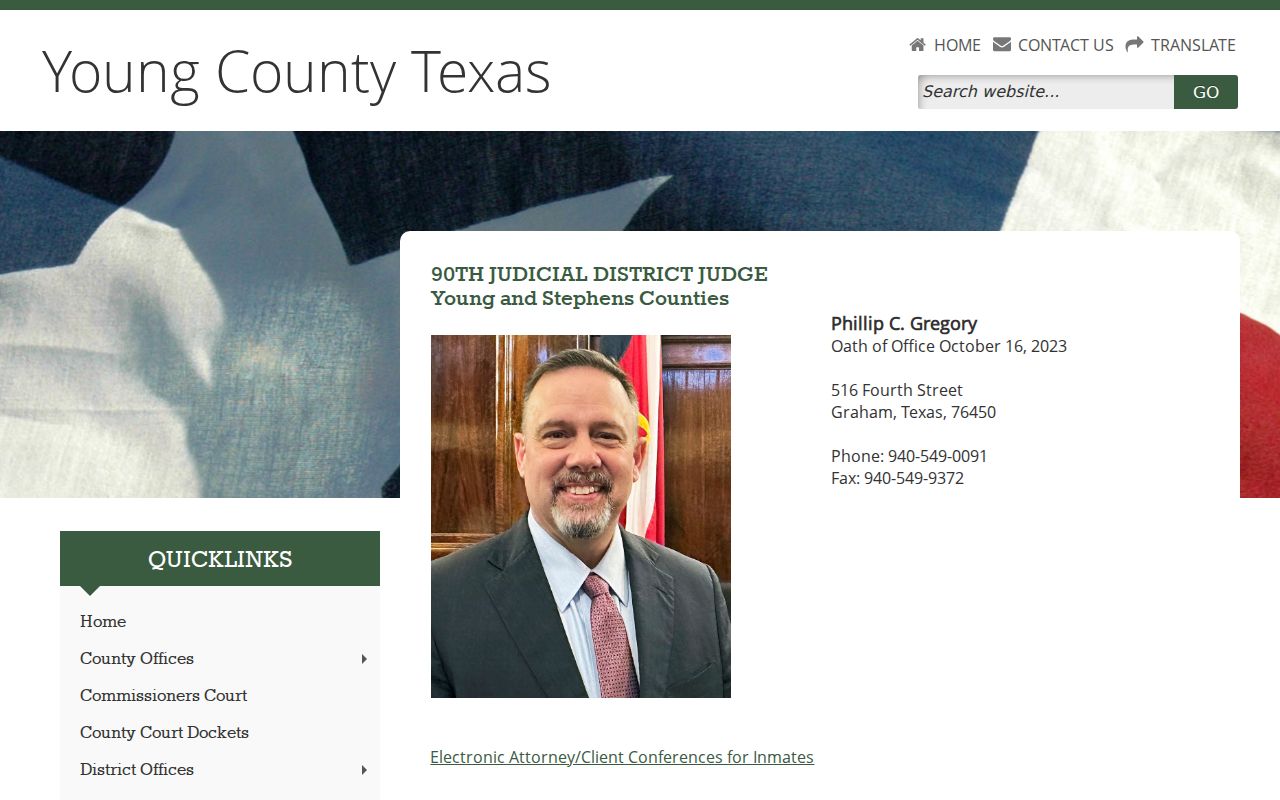
The District Clerk, not the judge's chambers, is the records custodian for a filed Young County criminal case. Ask for the criminal index entry, docket sheet, indictment, bond orders, motions, plea papers, judgment, sentence, and certified disposition as needed. Prosecutor screening can change a booking allegation before an indictment is returned. The filed charge and final judgment therefore carry more weight than the wording on an intake sheet.
Young County District Clerk
Young County Courthouse
516 Fourth Street
Graham, TX 76450
Confirm counter hours through the official clerk page.
Young County Clerk
Young County Courthouse
516 Fourth Street
Graham, TX 76450
Confirm county-court access through the official clerk page.
Young County Criminal Case Record Searches
No official Young County online criminal case-search interface was verified. Direct clerk contact is the working route by counter, phone, mail, or a written search request. Use the exact name shown in the case, an approximate filing year, the cause number when known, and the expected court. Ask in advance about the electronic index's date coverage, search charges, copy rates, certification, remote delivery, and any file review needed before release.
- Identify the court level from the charge, citation, bond paper, or filing notice.
- Contact the District Clerk for a felony or the County Clerk for a county misdemeanor.
- Give the full party name, approximate year, offense, and cause number if known.
- Ask for the docket and the exact filed documents needed, including the judgment or certified disposition.
- For an older case, request a manual archive search and confirm how copies can be inspected or delivered.
The county's vendor-hosted Official Records Search displays recorded-instrument fields, not a verified criminal docket. Its visible search terms include department, grantor or grantee, subdivision, document type or number, date range, and OCR scope. Do not treat a no-match there as proof that no Young County criminal case exists.
| Search detail | Use | Required | Notes |
|---|---|---|---|
| Full legal name | Clerk name search | Usually | Include former names when reviewing your own file. |
| Cause number | Exact case retrieval | No | Best locator when available. |
| Filing year | Narrow archive or index | No | Give a reasonable range for older files. |
| Court level | Route to custodian | Yes | District, county, justice, or municipal. |
| Document requested | Copy order | Yes | State whether a certified copy is needed. |
Young County Court Portal Limits
re:SearchTX is a statewide electronic document interface, but it does not replace the local clerks for this task. The Texas Judicial Council's 2024 public-access report says the large statewide collection excludes criminal case records. Registration or a search there cannot cure that gap. A Young County criminal court case must still be traced through the District Clerk, County Clerk, justice court, or municipal clerk that holds it.
The distinction also prevents a common mistake with the County Clerk's Official Records Search. Official branding describes the custody of recorded instruments; it does not prove that criminal causes are indexed in that product. If the record sought is an indictment, docket, plea, judgment, sentence, or dismissal, name the document when contacting the case clerk.
Note: A blank statewide or official-records search result is not a certified finding that no Young County court case exists.
What a Criminal Case File Contains
A Young County case file follows the filed cause rather than the jail intake. The header identifies the court, cause number, parties, filing date, case type, and status. Later entries can reveal appointed or retained counsel, court settings, motions, pleas, trial events, and post-judgment work. The documents needed for a self-audit are often the charging instrument and certified final disposition, since those show what prosecutors filed and how the court resolved each count.
| Cause and court | Cause number, State of Texas case style, court, filing date, and current status. |
|---|---|
| Charging document | Complaint, information, or indictment with charge, statute, count, and offense class. |
| Docket entries | Settings, motions, orders, pleas, trial events, revocation actions, and appeal notices. |
| Bond and process | Warrant or capias entries, returns, bond type, amount, surety, and conditions when public. |
| Disposition and judgment | Dismissal, acquittal, deferred adjudication, conviction, punishment, and costs. |
| Sentence | Confinement, credit, community supervision, restitution, and concurrent or consecutive terms. |
Financial entries can show a fine, court costs, restitution, and payment status when those items were ordered. Review the signed judgment rather than inferring the outcome from a docket label. If only one document can be certified, ask the clerk which filing states the final result for the specific count being checked.
Young County Case Outcomes Explained
Outcome terms answer different questions. In a Young County file, an indictment is a grand jury's accusation, not proof of guilt. A no-bill means the grand jury declined the proposed indictment. A dismissal ends a filed charge without a conviction, while an acquittal is a not-guilty result. Deferred adjudication places a person on community supervision after a plea without an immediate finding of guilt, but successful completion is not the same as expunction.
- Disposition
- The final or current result recorded for a charge.
- Judgment
- The signed court record of the outcome and punishment, if any.
- Capias
- A court order commanding arrest after a procedural trigger.
- Nondisclosure
- An order limiting public disclosure while allowing access by authorized agencies.
When a Texas DPS arrest cycle lacks its outcome, obtain the certified Young County disposition and follow the DPS personal review and correction process. The DPS search support page explains public-search credits and offline records.
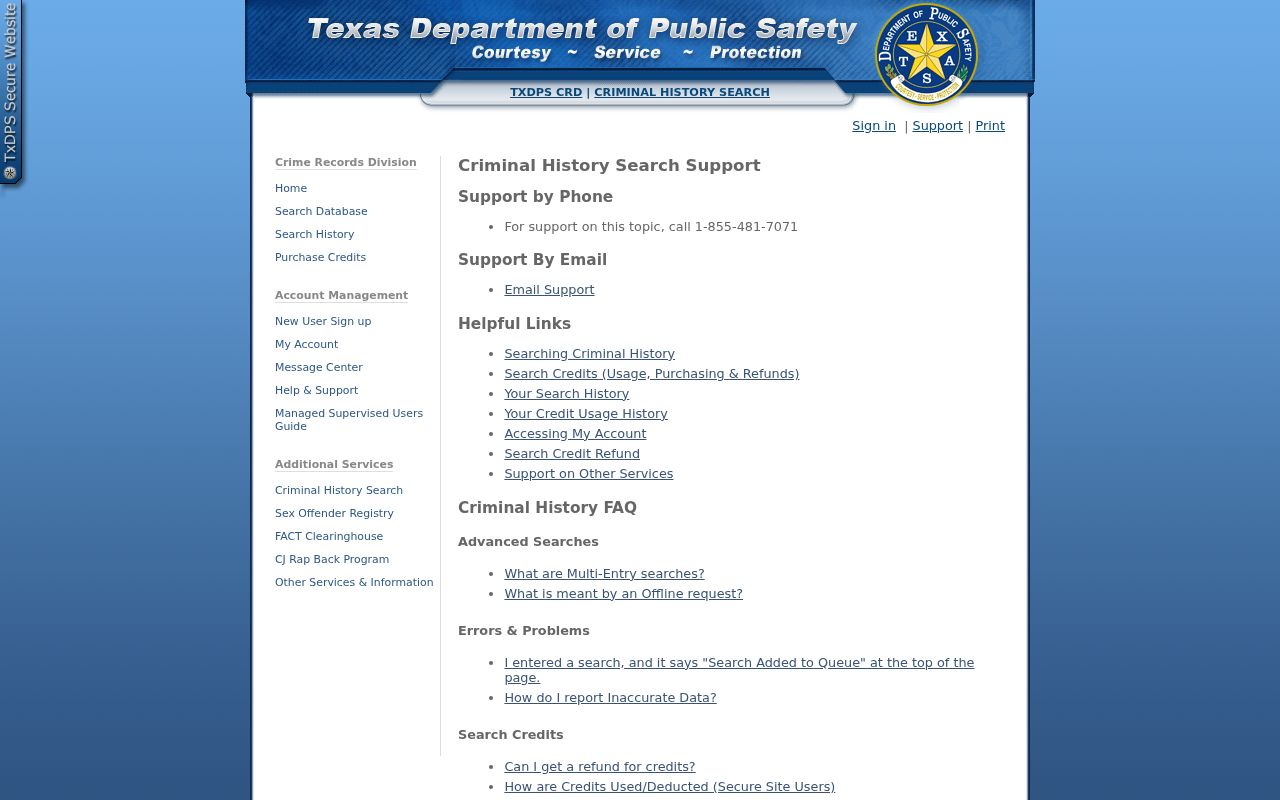
The support screen helps distinguish repository issues from the local clerk's record. A certified judgment can document an outcome even when the paid public name product does not display it.
Criminal Case Stages in Young County
A Young County criminal matter can begin with arrest and magistration, followed by prosecutor screening. A misdemeanor may proceed by information. A felony can move to the grand jury and an indictment. Arraignment records the plea, and pretrial work can include discovery, motions, bond review, and settings. The case then ends by dismissal, plea, or trial, followed by judgment and sentencing when applicable. Appeal or later supervision proceedings can add more docket entries.
Case flow: Charges Filed › Arraignment › Pretrial › Plea or Trial › Disposition › Sentencing
In Young County, magistration is earlier than arraignment. Texas law requires an arrested person to be taken before a magistrate without unnecessary delay, generally within 48 hours. That first probable-cause and bond action may sit with a justice or municipal magistrate before the filed cause reaches the trial-court clerk.
Archived Young County Criminal Cases
The current courthouse dates to 1932, and older Young County cases may predate any electronic index. Historic dockets can remain in bound volumes, microfilm, scanned images, or clerk storage. Give an archivist or clerk the defendant's name, an approximate year, likely charge, and court. Ask whether staff can search an old criminal index and whether fragile material must be viewed under special handling rules.
Genealogy and local-history searches benefit from separating minutes, indictments, jail registers, and case files. Each may have a different custodian. The absence of a scan does not mean the record was lost. Phone-first verification is useful in this rural county because staff can confirm the correct office, file availability, copy estimate, and appointment before a trip to Graham.
Federal Cases Affecting Young County
Federal criminal matters from Young County belong to the U.S. District Court for the Northern District of Texas, not the county clerks. PACER provides federal dockets and filed documents through an account, subject to its current fee and quarterly-waiver rules.
PACER may show a docket while sealed or redacted criminal documents remain unavailable remotely. The Northern District clerk is the authoritative source. Federal custody is a separate question, and a federal docket should not be confused with a county booking or a Texas DPS history.
Access Rules for Case Records
Public access to Young County case records depends on the document and its custodian. Clerk-held case files follow court-record rules, while administrative and law-enforcement material may fall under the Texas Public Information Act. Juvenile files, expunged records, sealed documents, grand-jury material, presentence reports, protected victim details, medical data, account numbers, and other confidential fields can be withheld or redacted. A public copy may therefore differ from the court's complete file.
The Texas Department of Criminal Justice and parole authorities hold later custody and supervision information, not the clerk's full cause. The Texas Board of Pardons and Paroles describes parole decision functions.
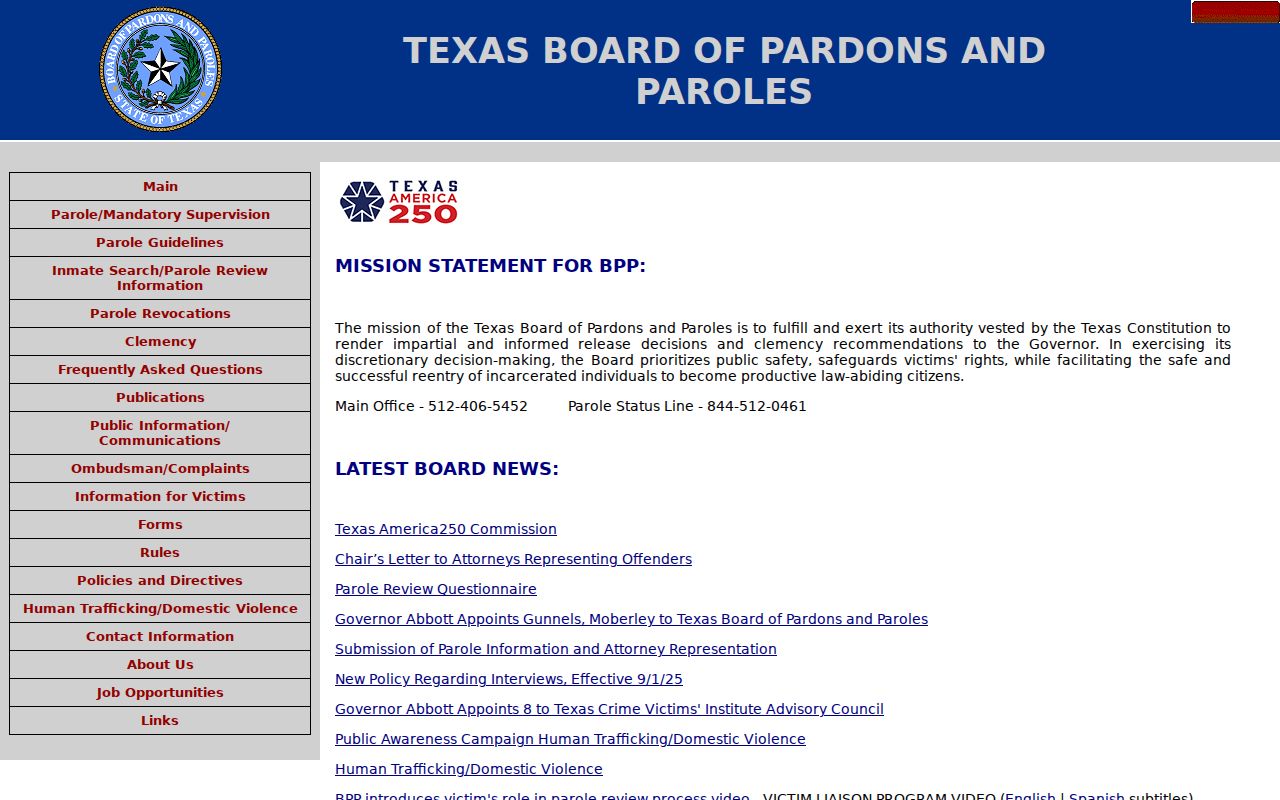
The parole page can add post-sentence context, but it cannot replace the Young County judgment. For the complete path, match the local docket and disposition to the proper state custody or supervision source.